Modern Talking: A Stylish Signature Font for Branding
When I first pulled up a blank brand board for a local artisanal candle shop, I knew the standard sans serif options wouldn't cut it. The client wanted warmth, intimacy, and a touch of luxury without feeling stiff. That is when I loaded Modern Talking, a stylish signature font which makes it perfect for various designs, into my workspace. As someone who has tested countless Script Handwritten typefaces over the years, I can tell you that finding one that balances personality with legibility is rare. This review shares my honest experience using Modern Talking across logo drafts, packaging mockups, and digital assets to help you decide if it belongs in your creative toolkit.
Testing Modern Talking for Logo Design and Brand Identity
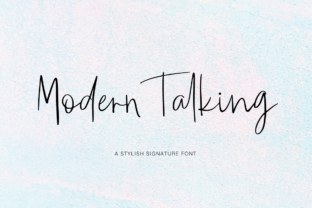
The first place any new typeface needs to prove itself is in the logo. For this project, I needed a wordmark that felt personal yet professional. Modern Talking delivers a fluid, connected stroke that mimics natural handwriting but maintains enough structure to remain readable at small sizes. Unlike some overly decorative script fonts that dissolve into illegible scribbles when scaled down, Modern Talking holds its shape. The letters connect smoothly, creating a cohesive visual unit that works exceptionally well for boutique identities, beauty brands, and lifestyle businesses.
In my testing, I found that Modern Talking shines as a primary logo element for businesses aiming for a friendly, approachable vibe. It does not scream "corporate," which is exactly the point. Instead, it whispers "handcrafted" and "cared for." When building the brand identity system, I paired it with a clean, geometric sans serif for secondary text. This contrast allowed the Script Handwritten qualities of Modern Talking to take center stage without overwhelming the viewer. If you are designing a logo for a bakery, florist, or creative studio, this font provides an immediate emotional connection that rigid typefaces simply cannot achieve.
Using Modern Talking on Packaging and Product Labels
Packaging design presents a unique challenge because space is often limited, and the font must compete with textures, colors, and materials. I applied Modern Talking to a series of candle label mockups, placing it against a matte kraft paper background. The result was striking. The font’s stylish signature aesthetic added a layer of premium feel to an otherwise simple package. It looked less like a mass-produced item and more like something poured by hand in a small studio.
One critical observation during this phase was the importance of sizing. While Modern Talking is versatile, it is fundamentally a display font. On large packaging surfaces, it reads beautifully. However, when I tried to use it for the ingredient list or fine print, it failed. This is not a flaw in the font but a reminder of its intended use. Script Handwritten Fonts are best reserved for headlines, product names, and short taglines. For the detailed information, I switched to a highly legible sans serif. This hierarchy ensured that the brand name popped while keeping the regulatory text clear and compliant. If you are working on skincare labels, food packaging, or handmade goods, let Modern Talking handle the hero text and pair it with a neutral body font for the rest.
Modern Talking for Social Media Graphics and Web Headers
In today’s digital-first landscape, a font must perform just as well on a smartphone screen as it does on print. I integrated Modern Talking into Instagram post templates and website hero sections to test its digital versatility. On social media, where users scroll quickly, the font’s distinct curves and stylish loops caught the eye effectively. It worked particularly well for quote graphics, announcement headers, and promotional banners. The personality of the font helped increase engagement by making the content feel more human and less automated.
For web design, I used Modern Talking in the H1 headers of a landing page. It loaded quickly and rendered crisply across different browsers. However, I avoided using it for navigation menus or long paragraphs. The intricate connections in the Script Handwritten style can become muddy on lower-resolution screens if the font size is too small. By keeping it large and bold in the header area, I maintained readability while establishing a strong visual tone. This approach is ideal for bloggers, online shop owners, and content creators who want to inject warmth into their digital presence without sacrificing user experience.
Pairing Modern Talking with Complementary Typefaces
A great font rarely stands alone; it thrives in conversation with other typefaces. Throughout my review, I experimented with various pairings to see what worked best with Modern Talking. Since it is a stylish signature font with a moderate to high contrast, it pairs beautifully with minimalist sans serifs. Think of fonts like Montserrat, Lato, or Open Sans. These neutral partners provide a stable foundation that allows the expressive nature of Modern Talking to shine without creating visual chaos.
I also tested it against classic serif fonts for a more traditional, elegant look. This combination worked well for wedding invitations and high-end editorial layouts. The serif added a sense of history and authority, while Modern Talking brought a contemporary, personal touch. Avoid pairing it with other complex script fonts or highly decorative display fonts, as this creates competition rather than harmony. The key to successful font pairing here is balance. Let Modern Talking be the voice, and let the supporting font be the silence that gives it space to speak.
Practical Licensing and Final Design Considerations
Before you download Modern Talking for your next client project, it is essential to review the licensing terms. As with all commercial Fonts, understanding where you can use the file is crucial. Whether you are creating logos for sale, designing packaging for retail, or building templates for digital products, ensure your license covers commercial use. Most premium font providers offer specific licenses for desktop, web, and app usage, so check the details to avoid legal issues down the line.
From a technical standpoint, I recommend testing the font in your specific design software before committing to a final layout. Check for available alternates or ligatures that might enhance the flow of certain letter combinations. While Modern Talking is robust, every design context is different. Print a test sheet if you are working on physical collateral to see how the ink interacts with the paper texture. For digital projects, test it on multiple devices to ensure consistent rendering. By taking these practical steps, you ensure that Modern Talking performs reliably across all mediums, delivering the stylish, professional result your brand deserves.